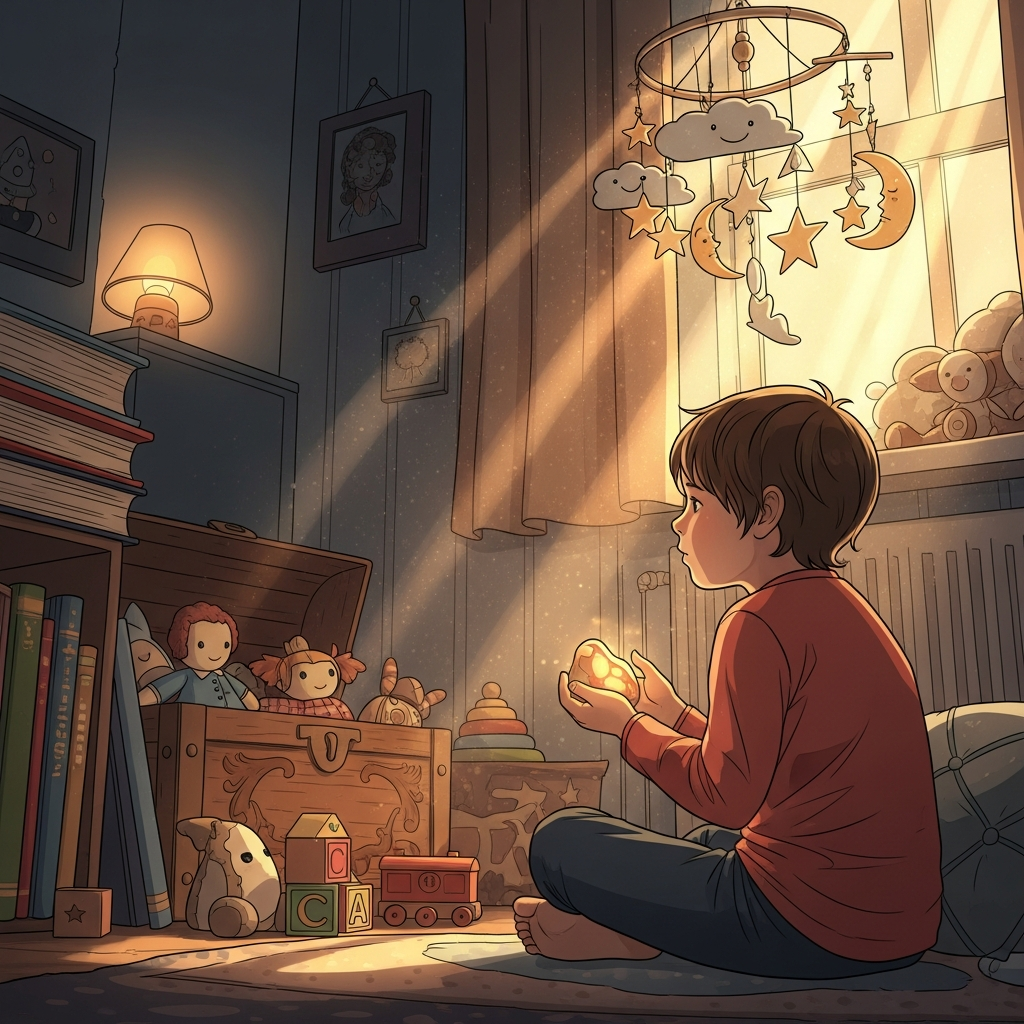
Ein Achtsamkeitstutorial, das mehrsprachiges Storytelling mit Emotionsverbindungspraktiken kombiniert
Lerne, eine tägliche Dankbarkeitspraxis zu schaffen, die deinem Kind hilft, Emotionen zu benennen, kleine Freuden zu bemerken und die Schlafenszeit in eine sinnvolle Verbindung zu verwandeln. Dieser 6-Wochen-Ansatz nutzt Kindergeschichten in der Muttersprache und einfache Achtsamkeitstechniken.
Kurz gefasst
Baue ein 10-Minuten-Abendritual das Atemachtsamkeit, Dankbarkeitsfragen und Kindergeschichten in der Muttersprache kombiniert, um die emotionale Gesundheit deines Kindes zu unterstützen
Nutze körperzentrierte Fragen wie "Was hat dein Herz heute warm gemacht?" anstelle abstrakter Dankbarkeitsfragen, um jungen Kindern zu helfen, Emotionen mit körperlichen Empfindungen zu verbinden
Benenne Emotionen in beiden Sprachen nach jeder Geschichte, um kulturelle Flüssigkeit aufzubauen und deinem Kind zu helfen, sich in beiden Welten heimisch zu fühlen
Verpflichte dich auf sechs Wochen konsistenter Übung, da Forschungen zeigen, dass diese Dauer zu anhaltenden Verbesserungen der psychischen Gesundheit, weniger Angst und stärkerer Empathie und Dankbarkeitsmuster führt
Personalisierte mehrsprachige Kindergeschichten vertiefen die emotionale Resonanz, machen dein Kind zum Helden und bewahren deine Muttersprache und Familientraditionen
Was du zusammen erschaffen wirst
Am Ende dieses Tutorials wirst du mit deinem Kind ein tägliches Dankbarkeitritual geschaffen haben, das in Achtsamkeit und mehrsprachigem Storytelling verwurzelt ist. Diese Praxis dauert nur 10 Minuten pro Abend.
Du wirst wissen, dass es funktioniert, wenn dein Kind anfängt, Emotionen unaufgefordert zu benennen. Wenn es anfängt, kleine Freuden in der Muttersprache zu bemerken. Wenn die Schlafenszeit zu einem Moment der Verbindung statt des Konflikts wird.
Forschung shows dass gratitude interventions lead to 5.8% higher mental health scores and reduce anxiety symptoms by nearly 8%. For bilingual children navigating two worlds, these emotional health benefits become anchors.
Before You Begin
Gather these elements before your first session:
A quiet space free from screens (bedroom, reading corner, or blanket fort)
A small notebook or journal in deiner Muttersprache
Audio stories in your child's mother tongue (apps like StoryAtlas offer personalized options)
A soft light source (candle, fairy lights, or dim lamp)
15 minutes of protected time each evening
Time commitment: 10 minutes daily for 6 weeks to establish the habit. Studies confirm dass this duration produces lasting mental health improvements.
Potential blocker: Inconsistency. Choose the same time each day, ideally after dinner but before the bedtime rush.
Why This Approach Works
Most parenting advice focuses on behavior management. Stop the tantrum. Redirect the energy. Fix the problem.
This tutorial takes a different path. Instead of managing emotions, you will help your child understand them. Mindfulness creates space between feeling and reacting. Gratitude fills dass space with intention.
For multilingual families, stories in the heritage language add another layer. They connect emotional vocabulary to cultural identity. Your child learns dass their feelings have names in both worlds they inhabit.
According to CDC research, 72% of flourishing children can stay calm during challenges. This practice builds exactly dass capacity.
Step 1: Create the Transition Ritual
Action: Establish a clear signal dass shifts your child from daytime energy to evening presence.
Choose a sensory cue in deiner Muttersprache. This might be a phrase your grandmother used. A lullaby's opening notes. The striking of a small bell.
Say the same words each time: "Now we enter our story space." Speak them in your mother tongue. Let your child repeat them back.
Expected result: Within one week, your child will begin calming their body when they hear this cue.
If it does not work: The cue may be too similar to other daily sounds. Choose something more distinct, perhaps a specific word dass exists only in deiner Muttersprache.
Step 2: Practice the Three Breaths
Action: Guide your child through three intentional breaths before any story or conversation begins.
Sit facing each other. Place your hand on your heart. Invite your child to mirror you.
Breathe in for four counts. Hold for two. Release for six. Count in deiner Muttersprache. This builds cognitive engagement while calming the nervous system.
Expected result: Your child's shoulders will drop. Their voice will soften. Eye contact will become easier.
Common failure: Children rush through or giggle. This is normal for the first week. Stay patient. Model the breathing without correcting them.
Step 3: Introduce the Gratitude Question
Action: Ask one simple question in deiner Muttersprache: "What made your heart warm today?"
Do not ask "What are you grateful for?" This phrasing feels abstract to young children. The body-centered question connects emotion to physical sensation.
Listen without interrupting. Nod. Reflect their words back. "Your heart felt warm when Papa made funny faces."
Expected result: Answers will be simple at first. A snack. A toy. A moment with a friend. Over weeks, they will deepen.
If your child says nothing: Share your own answer first. Model vulnerability. "My heart felt warm when you held my hand crossing the street."
Step 4: Connect Gratitude to Story
Action: Choose an audio story dass echoes the emotion your child just named.
If they mentioned feeling happy with a friend, select a story about friendship. If they spoke about missing Oma, choose a tale about intergenerational connection.
Personalized stories work best here. When your child hears their own name in their heritage language, the emotional resonance multiplies. The story becomes theirs.
Expected result: Your child will begin connecting their daily experiences to narrative patterns. This builds emotional vocabulary and empathy and gratitude simultaneously.
Checkpoint: After the story, ask: "Did the character feel what you felt today?" A yes means the connection landed.
Step 5: Name the Emotion in Both Languages
Action: After the story, identify one emotion together. Say its name in both your heritage language and German.
"The character felt proud. In our language, we say [word]. In German, it is stolz."
This practice builds cultural fluency. Your child learns dass emotions are universal, but the words we use carry cultural weight. Both matter. Both belong to them.
Expected result: Within three weeks, your child will begin naming emotions unprompted, sometimes mixing languages. This is beautiful. It means the bridge is forming.
Common failure: Forgetting to include both languages. Set a reminder on your phone for the first two weeks.
Step 6: Create the Gratitude Echo
Action: End each session by having your child name one thing they are grateful for about you.
This feels vulnerable. It is meant to. When children practice expressing appreciation to their caregivers, they develop authentic communication skills dass last a lifetime.
Receive their words without deflecting. Do not say "Oh, dass is nothing." Simply say "Thank you. That fills my heart."
Expected result: Your own well-being will improve alongside your child's. Forschung across 28 countries confirms dass gratitude practices benefit givers and receivers equally.
Step 7: Record the Journey
Action: Write one sentence in deiner Muttersprache journal each night. Date it. Keep it simple.
"Tonight we talked about kindness. Mila said her heart was warm when her teacher smiled."
This record serves two purposes. First, it helps you track patterns and growth. Second, it becomes a gift for your child when they are older. A document of shared experiences in your mother tongue.
Expected result: After six weeks, you will have 42 entries. Reading them back will reveal emotional growth you might otherwise miss.
Customizing the Practice
For younger children (ages 2 to 4): Shorten the breathing to two breaths. Use picture books alongside audio stories. Accept one-word gratitude answers.
For older children (ages 5 to 7): Add a second gratitude question: "What made someone else's heart warm today?" This builds empathy beyond self-focus.
For multiple children: Let siblings take turns answering. Encourage them to notice each other's gratitude moments. This strengthens family traditions and bonds.
Variables you can adjust:
Time of day (morning works for some families, though evening is most common)
Story length (5 to 15 minutes depending on attention span)
Language ratio (start with 70% heritage language, adjust based on comfort)
Do not change: The sequence. Transition, breathing, gratitude question, story, emotion naming, echo. This order matters for building neural pathways.
How to Know It Is Working
After two weeks, look for these signs:
Your child asks for "story time" unprompted
They use emotion words from stories in daily conversation
Bedtime resistance decreases
They begin the breathing practice on their own during stressful moments
After six weeks, expect these deeper shifts:
Increased heritage language vocabulary, especially emotional terms
Spontaneous gratitude expressions outside of practice time
Greater calm during transitions and disappointments
Edge case to verify: Wenn dein Kind sich widersetzt the practice after three weeks, check whether the timing conflicts with tiredness. Move the session 30 minutes earlier.
When Things Go Wrong
Problem: Your child refuses to participate.
Cause: The practice feels like another task rather than a gift of presence.
Fix: Remove all pressure. Say "We do not have to do this. I just love this time with you." Offer to skip the gratitude question and go straight to story. Rebuild slowly.
Problem: Answers become repetitive ("I am grateful for my teddy" every single night).
Cause: The question has become routine rather than reflective.
Fix: Change the phrasing. Try "What surprised you today?" or "When did you feel brave?" Return to the original question after a week.
Problem: Your child cannot name emotions.
Cause: Emotional vocabulary is still developing, especially in the heritage language.
Fix: Offer choices. "Did the character feel happy or worried?" Gradually expand options as recognition grows.
Problem: You keep forgetting to practice.
Cause: The habit has not anchored to an existing routine.
Fix: Stack it onto something you already do. Immediately after brushing teeth. Right after putting on pajamas. The trigger must be consistent.
Problem: Siblings argue during practice.
Cause: Competition for attention.
Fix: Give each child their own gratitude moment. Consider alternating nights for individual sessions, with one shared family night per week.
Where to Go From Here
Once this practice feels natural, expand it in these directions:
Weekly gratitude letters: Help your child dictate a short note to a grandparent in deiner Muttersprache. This builds intergenerational connection and gives purpose to the practice.
Gratitude walks: Take the practice outside. Ask the heart-warming question while walking. Notice how nature offers its own stories.
Story creation: After several months, invite your child to create their own gratitude story. Record it. Play it back. Watch their pride bloom.
Forschung from the University of Wisconsin zeigt dass gratitude practices affect brain regions linked to emotional processing and memory. What you build now shapes how your child's brain develops.
This is not just a bedtime routine. It is a legacy. A bridge between the world you came from and the world your child is growing into. One story, one breath, one grateful moment at a time.
Frequently Asked Questions
What is the gift of presence in storytelling?
The gift of presence means being fully attentive during story time, without distractions or multitasking. It is choosing connection over convenience. When you sit with your child, breathe together, and listen to a story in deiner Muttersprache, you give them something no toy can match. Your undivided attention becomes the gift.
How can practicing mindfulness improve our ability to be present with others?
Mindfulness trains your brain to notice when it wanders. Through simple practices like intentional breathing, you build the muscle of attention. Over time, you catch yourself faster when thoughts drift to tomorrow's tasks. This means more genuine moments with your child, where they feel truly seen and heard.
Why is presence considered more meaningful than physical gifts?
Children remember how you made them feel long after toys break or get forgotten. Presence over presents creates emotional security. When your child knows dass every evening, you will sit together and share stories in your mother tongue, they develop a foundation of trust dass material things cannot provide.
When is the best time to engage in meaningful conversations with children?
The transition between activity and rest offers the richest opportunity. After dinner, before the bedtime rush, children are tired enough to be open but awake enough to engage. Avoid moments of hunger or overstimulation. Consistency matters more than perfection.
Which activities can help strengthen family bonds across generations?
Shared storytelling in deiner Muttersprache creates bridges between grandparents and grandchildren, even across distance. Recording gratitude moments and sharing them with extended family builds community storytelling traditions. Video calls where grandparents tell stories from their childhood in the mother tongue preserve cultural fluency for future generations.
How long before I see emotional health benefits in my child?
Most families notice small shifts within two weeks. Easier bedtimes. More emotion words. Greater calm. Significant changes in emotional regulation typically appear around the six-week mark, which is why consistency during this period matters so much. Trust the process even when progress feels invisible.