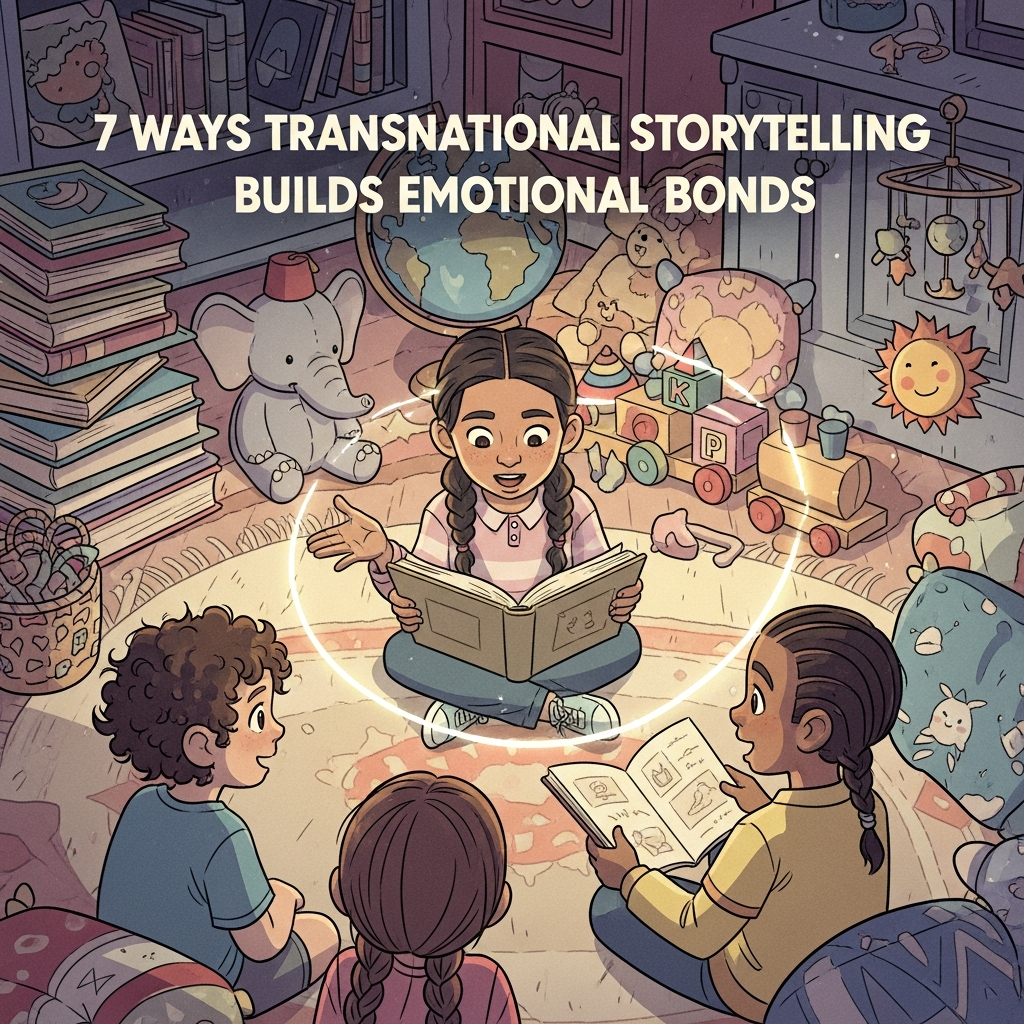
Wie zweisprachige Familien kulturell angepasste Kindergeschichten nutzen, um Verbindungen zu bewahren und bleibende Erinnerungen zu schaffen
Entdecke, wie transnationale Geschichtenerzählung über bloße Übersetzung hinausgeht, um sinnvolle emotionale Bindungen für zweisprachige Familien zu schaffen. Lerne sieben praktische Ansätze kennen, die sich den einzigartigen Herausforderungen der Kindererziehung zwischen Sprachen und Kulturen stellen.
TL;DR
Namenintegration transformiert passives Zuhören in aktive Identifikation - Wenn dein Kind seinen eigenen Namen in einer Geschichte hört, wird es zum Helden statt zum Beobachter.
Code-Switching in Geschichten validiert echte zweisprachige Familienkommunikation - Die beste transnationale Geschichtenerzählung spiegelt wider, wie deine Familie tatsächlich spricht und vermischt Sprachen natürlich.
Kulturelle Anker machen abstrakte Werte konkret - Spezifische Lebensmittel, Rituale und Objekte aus deinem Erbe verankern emotionale Konzepte in erkennbarer Realität.
Intergenerationale Stimme schafft Präsenz über Entfernung hinweg - Geschichten in den Ausdrücken und Rhythmen der Großeltern erzählt bewahren Verbindung, wenn physische Nähe nicht möglich ist.
Beginne mit einem Ansatz und baue schrittweise auf - Perfekte Umsetzung ist weniger wichtig als konsistentes, freudiges Engagement mit Kindergeschichten, die die mehrsprachige Realität deiner Familie widerspiegeln.
Der stille Kampf hinter jeder Gute-Nacht-Geschichte
Du kennst das Gefühl. Ein weiterer Abend, eine weitere Geschichte, die nicht so ganz passt. Die Charaktere haben Namen, die dein Kind nicht aussprechen kann. Die Schauplätze fühlen sich fern an. Die kulturellen Anspielungen wirken flach.
Für zweisprachige Familien, die zwei Welten navigieren, ist generischer Inhalt nicht nur langweilig. Es ist eine verpasste Chance. Eine kleine Auslöschung, die Nacht für Nacht geschieht.
In 2024, over 20% of households in major cities speak a language other than the dominant one at home. Yet most children's content still assumes a monolingual, monocultural audience. The gap between what families need and what exists has never been wider.
Translational storytelling offers something different. Not just translation. Transformation. Stories that carry meaning across languages while building emotional bonds through stories that actually reflect your family's reality.
What This List Offers (And What It Doesn't)
This is for you if you're raising children between languages. If you've felt the weight of keeping a heritage alive while building a new home. If bedtime stories feel like they should matter more than they currently do.
We won't cover basic translation tips or language learning apps. This isn't about vocabulary drills disguised as entertainment.
Instead, these seven approaches show how translational storytelling creates genuine community building and lasting emotional connections. Each one addresses a specific challenge bilingual families face, with practical ways to bring it into your home.
How These Approaches Were Chosen
Every approach here meets three criteria. It must bridge cultural contexts, not just languages. It must create emotional resonance that generic content cannot. And it must be something families can actually implement without becoming exhausted.
The goal is connection, not perfection.
1. Name Integration Creates Instant Belonging
Why It Matters
Children's names carry weight. Family history, cultural meaning, parental hopes. When a story uses a generic "Max" or "Emma," your child becomes an observer rather than a participant. Translational storytelling that integrates your child's actual name transforms passive listening into active identification.
What It Looks Like Today
Personalized story platforms now use AI to weave children's names naturally into narratives. This goes beyond simple find-and-replace. The name becomes part of the story's fabric, appearing in dialogue, plot points, and character development.
How to Apply It
When choosing or creating stories, prioritize those that use your child's name in meaningful moments. The hero's journey should feel like their journey. This single change often determines whether a child asks to hear a story again.
2. Code-Switching Mirrors Real Family Life
Why It Matters
Bilingual families don't speak in neat, separated languages. You switch mid-sentence. You use the word that fits best, regardless of which language it comes from. Stories that acknowledge this reality validate how your family actually communicates.
What It Looks Like Today
Progressive children's content now incorporates natural code-switching. Research from cognitive linguists shows this approach supports rather than confuses language development. It normalizes the beautiful complexity of multilingual minds.
How to Apply It
Seek stories that blend languages thoughtfully. Or adapt existing stories by adding phrases from your heritage language at emotional high points. Let the switching feel natural, not educational.
3. Cultural Anchors Ground Abstract Emotions
Why It Matters
Every culture has specific objects, foods, and rituals that carry emotional weight. A story about courage means more when it references your grandmother's specific dish. Abstract values become concrete through cultural anchors your child recognizes.
What It Looks Like Today
The best translational storytelling incorporates culturally specific details rather than generic placeholders. Digital storytelling platforms can now customize these elements based on family background, creating narratives that feel handcrafted rather than mass-produced.
How to Apply It
Identify three to five cultural anchors from your heritage: a food, a celebration, a family ritual, a piece of clothing, a type of music. Look for stories that include these, or use them as prompts when creating your own family folklore.
4. Intergenerational Voice Preserves What Matters
Why It Matters
When grandparents live far away or speak limited German, connection becomes fragmented. Stories told in a grandparent's voice, using their phrases and rhythms, create presence across distance. This is heritage preservation in its most intimate form.
What It Looks Like Today
Studies on intergenerational narratives show children develop stronger cultural identity when exposed to family stories told in authentic voices. Audio storytelling technology now allows families to capture and share these voices across continents.
How to Apply It
Record family members telling stories, even short ones. These recordings become treasures. If direct recording isn't possible, write down phrases and expressions unique to your family's way of speaking, then incorporate them into story time.
5. Emotional Vocabulary Expands in Both Languages
Why It Matters
Some feelings have no direct translation. The German "Geborgenheit" or the Portuguese "saudade" capture experiences that require explanation in other languages. Translational storytelling introduces these untranslatable concepts, giving children richer emotional tools.
What It Looks Like Today
With 84-90% of parents expressing desire for bilingual education options, content creators are responding with stories that teach emotional concepts unique to specific cultures. These aren't vocabulary lessons but natural introductions through narrative context.
How to Apply It
Choose one untranslatable word from your heritage language each month. Find or create a story that demonstrates this concept in action. Let your child experience the feeling before you name it.
6. Shared Rituals Build Community Across Distance
Why It Matters
When cousins in different countries hear the same story, they share something concrete. Translational storytelling creates common ground for children who might otherwise struggle to connect across language barriers. This is community building at the family level.
What It Looks Like Today
Families increasingly coordinate story experiences across households. A grandmother in Istanbul, parents in Berlin, and cousins in Toronto can all engage with the same narrative in their preferred languages. The story becomes a meeting point.
How to Apply It
Establish a "family story" that everyone knows. Share it across households in whatever language works best for each. Create traditions around discussing or extending this story during video calls.
7. Adaptive Complexity Grows With Your Child
Why It Matters
A three-year-old and a seven-year-old need different things from the same story. Translational storytelling that adapts complexity allows families to maintain beloved narratives while challenging growing minds. The story evolves as your child does.
What It Looks Like Today
Modern digital storytelling platforms offer multiple versions of the same narrative. Vocabulary, sentence structure, and thematic depth adjust based on age. This approach supports cognitive benefits of storytelling while maintaining emotional continuity.
How to Apply It
When you find a story your child loves, look for ways to deepen it over time. Add new details, ask more complex questions, introduce related stories from the same cultural tradition. Let favorites grow rather than be outgrown.
The Pattern Beneath These Approaches
Notice what connects these seven approaches. Each one prioritizes emotional truth over linguistic accuracy. Each creates space for your family's specific reality rather than forcing you into someone else's template.
Translational storytelling isn't about perfect translation. It's about creating emotional bonds through stories that honor complexity. Your child lives between languages, between cultures, between worlds. Their stories should reflect that richness, not flatten it.
The families who thrive in this space understand something important. Language preservation happens through love, not obligation. Cultural connection grows from joy, not duty.
Where to Start Without Overwhelm
You don't need to implement all seven approaches tonight. Start with one. Perhaps name integration, because it requires the least effort and delivers immediate results. Or intergenerational voice, if you have recordings to work with.
Add another approach when the first feels natural. Building these practices takes time. Your child won't remember whether you started perfectly. They'll remember that stories felt like home.
The goal isn't to check boxes. It's to create moments where your child sees themselves reflected, where your heritage language feels alive, where bedtime becomes a bridge between worlds.
Frequently Asked Questions
What is multilingual storytelling?
Multilingual storytelling creates narratives that work across multiple languages while preserving cultural meaning and emotional resonance. Unlike simple translation, it adapts stories to feel native in each language, incorporating cultural references, naming conventions, and emotional concepts specific to each linguistic context. For bilingual families, this means stories that honor both worlds your child inhabits.
Why is multilingual storytelling important for cultural connection?
Children form their sense of identity through the stories they hear. When those stories reflect their cultural background, they develop stronger connections to their heritage. Multilingual storytelling provides this reflection in ways that generic content cannot, showing children that their family's language and traditions are worthy of celebration, not just preservation.
How can storytelling in multiple languages enhance language learning?
Stories create emotional context for language acquisition. When children hear words connected to characters they love and adventures that excite them, vocabulary sticks. Multilingual storytelling also normalizes code-switching and demonstrates that languages can coexist naturally, reducing the anxiety some children feel about speaking their heritage language.
Which techniques are effective for creating multilingual stories?
The most effective techniques include natural code-switching, cultural anchor integration, name personalization, and adaptive complexity. Rather than treating languages as separate containers, effective multilingual stories allow them to flow together as they do in real bilingual households. Emotional authenticity matters more than linguistic perfection.
How does multilingual storytelling promote inclusivity?
When children see their languages and cultures represented in stories, they receive a powerful message: you belong here. Multilingual storytelling expands the definition of "normal" childhood experiences, showing that families who speak multiple languages aren't exceptions but part of a rich, diverse community. This visibility benefits all children, not just those from multilingual homes.
When should families start using translational storytelling?
The earlier, the better, though it's never too late. Children as young as six months benefit from hearing their heritage language in story form. For families who start later, translational storytelling can rekindle interest in a language a child has begun to resist. The key is consistency and joy, making heritage language exposure feel like a gift rather than a requirement.
Sources
https://www.census.gov/library/stories/2022/12/languages-we-speak-in-united-states.html
https://www.apa.org/monitor/2023/03/cover-bilingual-benefits
https://www.sciencedirect.com/science/article/pii/S0885200622000114
https://www.oecd.org/education/school/Encouraging-Quality-in-Early-Childhood-Education-and-Care.pdf