How family folklore becomes your child's most treasured memory through the simple ritual of storytelling
Discover why the stories you tell matter more than the apps you download. Learn how bedtime storytelling rituals create lasting emotional bonds and preserve cultural heritage in bilingual families.
TL;DR
The ritual matters more than the story - Research shows family rituals explain nearly 15% of family cohesion, regardless of the specific activity.
Generic content creates generic memories - Personalized stories in your heritage language build emotional bonds that catalog content cannot replicate.
Heritage preservation happens nightly - Every story told in your mother tongue is an act of cultural transmission, not just entertainment.
Your child needs your story - The cognitive benefits of storytelling emerge when children become heroes in narratives that belong to them.
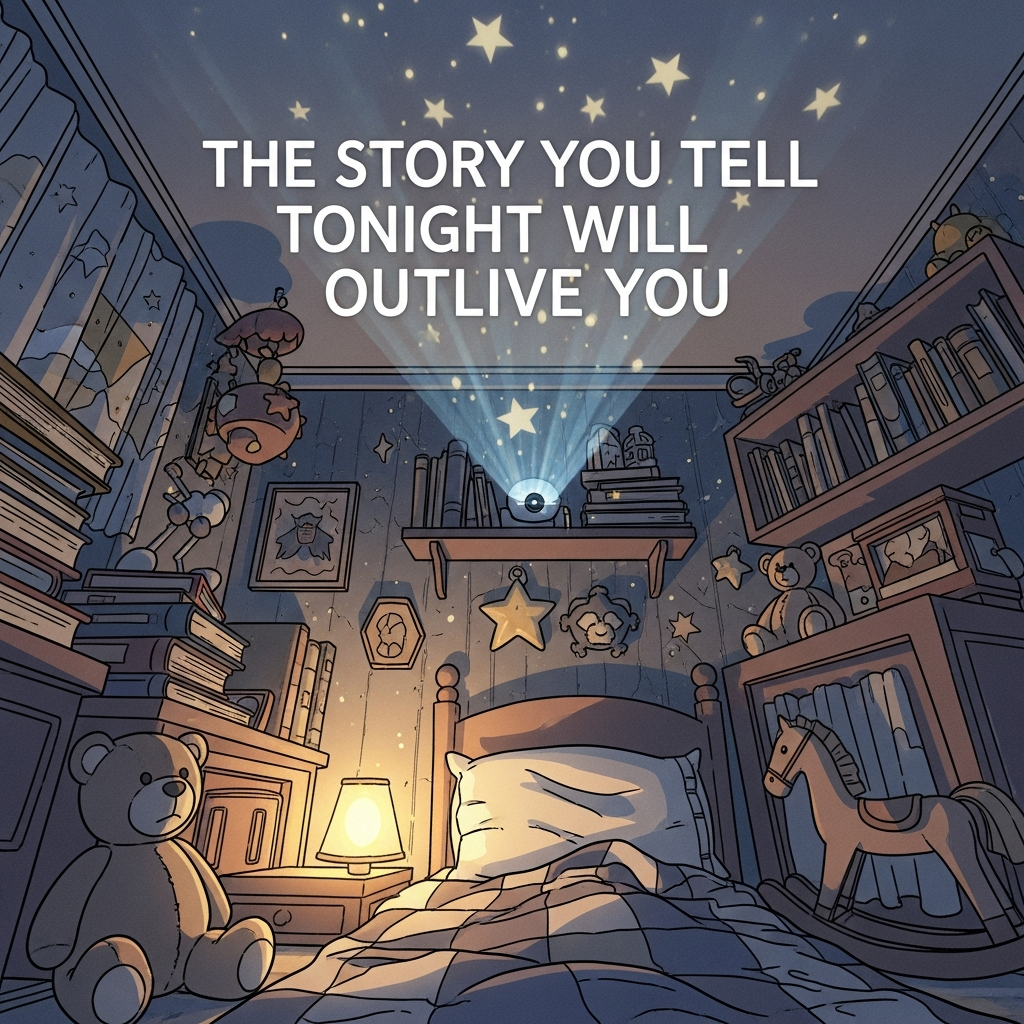
The Story You Tell Tonight Will Outlive You
Here is something strange about memory. Your child will forget most of what happens this year. The trips, the toys, the Tuesday afternoons. But the story you tell them tonight, in your mother tongue, with their name woven into the adventure? That one stays.
Not because it was spectacular. Because it was yours. Because it was ritual. Because somewhere between "once upon a time" and sleep, family folklore became something they will carry forever.
We Have Been Told Content Is King
The parenting world insists on more. More apps. More educational content. More screen time that "counts." We scroll through endless catalogs searching for the perfect story, the one that will magically teach our children everything we want them to know.
And yet. The German market overflows with content while your language, your grandmother's language, sits in silence. The assumption has been that any story is better than no story. That exposure equals connection. That quantity builds bonds.
This worked when communities were small and stories passed naturally from lap to lap. It does not work when you are raising a bilingual child in Berlin, watching them drift toward the dominant language while your heritage fades into background noise.
The Real Magic Is Not the Story. It Is the Telling.
Here is what I actually believe: the cognitive benefits of storytelling have almost nothing to do with the story itself. They emerge from the ritual. The repetition. The fact that you chose to sit down, in your language, and make your child the hero.
Generic content fatigue is not about too much content. It is about content that belongs to no one.
What the Research Actually Shows
Researchers studying family rituals discovered something beautiful. The symbolic meaning and enactment of family rituals explains nearly 15% of the variation in family cohesion among young adults. Not the activity itself. The meaning attached to it.
In north Georgia, families return year after year to the same cabins for spiritual renewal. Their children grow up, have children of their own, and return again. The cabins matter less than the returning. The ritual provides a framework for updating family identity across generations.
"Enacting a family ritual is more important than the specific form that the ritual takes," note researchers in the Journal of the Association for Consumer Research. This is not about finding the perfect story. It is about showing up, night after night, with intention.
I have watched this in my own home. The story my daughter requests is rarely the cleverest one. It is the one where she saves the village. Where her name echoes through the adventure. Where the language wraps around her like a blanket she did not know she needed.
Studies on family memory and psychological resilience show that children who hear family stories, who understand their place in a larger narrative, develop stronger emotional foundations. The emotional bonds through stories are not metaphorical. They are measurable.
"Our most treasured memories are likely experiences we shared with other people," memory researchers tell us. Not experiences we consumed alone. Not content we scrolled past. Shared moments that became shared meaning.
What Changes If This Is True
If the ritual matters more than the content, then your search for the perfect story is solving the wrong problem. You do not need a bigger catalog. You need a story that is yours.
If heritage preservation happens through repetition and meaning, then the nightly story in your mother tongue is not a nice extra. It is the main thing. The language your child hears from you, wrapped in adventure and wonder, becomes the language they feel at home in.
If emotional bonds through stories depend on personalization and presence, then generic content will always fall short. Not because it is bad. Because it belongs to everyone, which means it belongs to no one.
The cost of ignoring this? Watch as your language becomes homework instead of home.
A Different Way to See It
Family folklore is not something you inherit. It is something you create, night by night, story by story.
Think of it this way: every time you tell a story in your language, with your child at the center, you are not just entertaining them. You are building their memory bank. You are teaching them where they come from. You are giving them a self that stretches beyond this apartment, this city, this moment.
The cognitive benefits of storytelling are real. But they are downstream of something simpler. You showed up. You chose your language. You made them the hero.
That is not content. That is culture being passed hand to hand.
The Story Only You Can Tell
Your child does not need another story. They need your story. Told in your voice. In the language that carries your own childhood, your own parents, your own sense of home.
The moment family folklore transforms into a cherished memory is not dramatic. It is quiet. It is Tuesday night. It is you, choosing to begin.
Frequently Asked Questions
Why is multilingual storytelling important for cultural connection?
Language carries culture in ways translation cannot capture. When children hear stories in their heritage language, they absorb not just words but belonging, identity, and a sense of home that spans generations.
How can storytelling in multiple languages enhance language learning?
Emotional engagement drives language retention. Stories that feature your child as the hero create motivation and memory anchors that vocabulary drills simply cannot match.
What makes personalized stories more effective than generic content?
Personalization transforms passive listening into active identity formation. When children hear their own name in an adventure, the story becomes part of their self-narrative, not just entertainment.