Why authentic communication through stories builds empathy and gratitude across generations
Discover why inclusive storytelling is essential infrastructure for multicultural families. Learn how authentic narratives preserve heritage and foster deep connections across generations.
TL;DR
Heritage doesn't transfer automatically - In dominant-language environments, culture flows toward the path of least resistance without intentional intervention
Stories build bridges, not walls - Inclusive storytelling in heritage languages creates belonging across cultures rather than forcing children to choose
Personalization changes everything - When children hear their name in their grandmother's tongue, the brain doesn't just remember, it claims ownership
This is abundance, not maintenance - Reframe heritage language from something to preserve into a gift that makes your child richer
The Story That Almost Disappeared
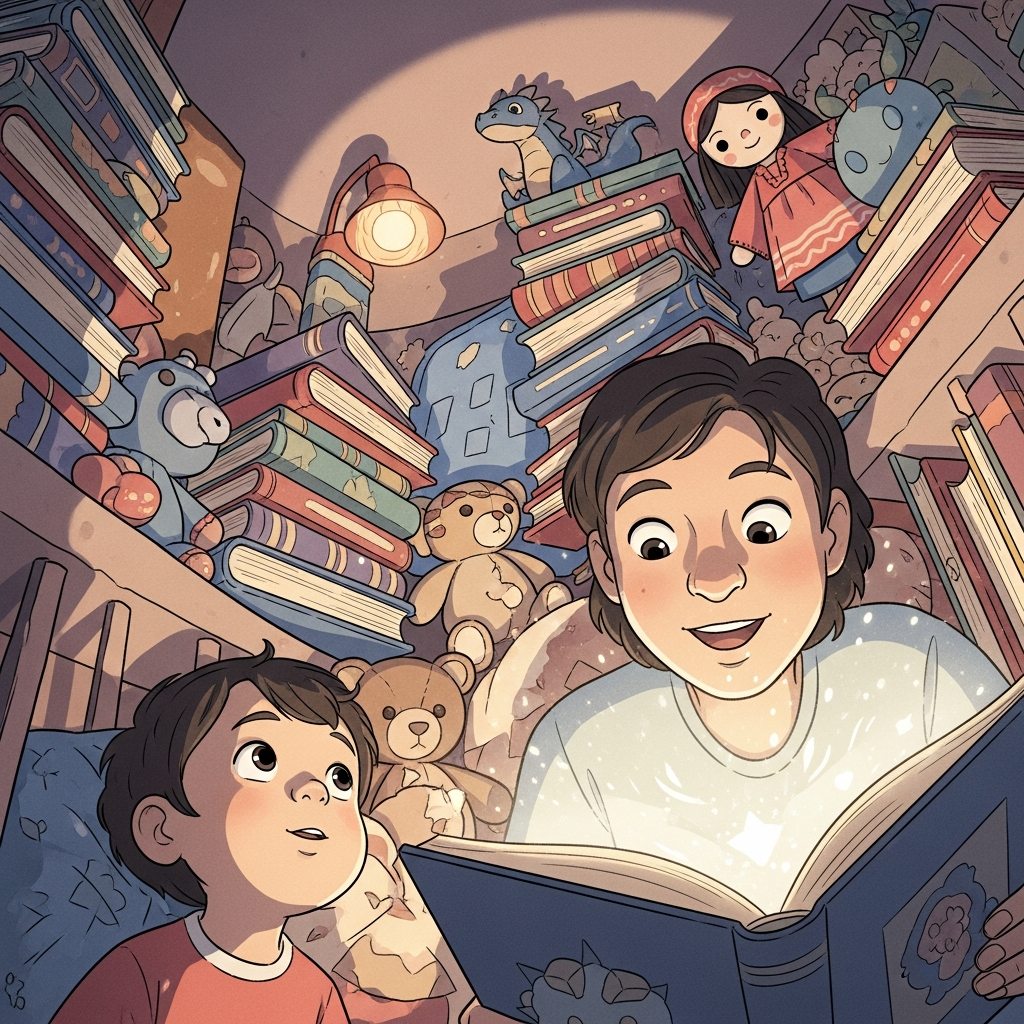
Your mother tells your daughter a bedtime story. The words flow in a language your child half-understands, half-feels. You watch from the doorway, heart caught somewhere between joy and grief.
This is the moment. The one where heritage either passes through or fades away. And you know, deep in your bones, that you cannot leave this to chance.
The Myth of "They'll Pick It Up"
We've been told that language and culture transfer naturally. That living in a multilingual home is enough. That children absorb their heritage like sunlight through a window.
This belief made sense when grandparents lived down the street. When entire neighborhoods spoke the same tongue. When stories passed from lap to lap, generation to generation, without effort.
But you live in Berlin. Or Hamburg. Or Munich. Your parents are a video call away. Your child's world speaks German, watches German content, plays with German-speaking friends. The window is closing, and "they'll pick it up" has become a comforting lie we tell ourselves because the alternative feels overwhelming.
Here's What I Actually Believe
Inclusive storytelling is not a nice-to-have for multicultural families. It is the infrastructure of belonging. Without stories that speak your child's name in your mother's tongue, heritage becomes a photograph instead of a living thing.
The Evidence Is Both Personal and Universal
I've watched this pattern unfold across countless families. The first generation fights to preserve everything. The second generation understands but responds in the dominant language. The third generation knows a few words, maybe a recipe, perhaps a holiday tradition stripped of its original meaning.
This isn't failure. This is physics. Culture flows toward the path of least resistance, and in Germany, that path speaks German.
But here's what changes the equation: stories where your child is the hero. Stories in their heritage language. Stories that make the unfamiliar feel like home.
Research shows that retention of information jumps from 5-10% with mere statistics to roughly 67% when paired with storytelling. This isn't marketing fluff. This is how human brains are wired. We remember what we feel. We feel what speaks to us directly.
And when that story uses your child's name? When the adventure happens in their grandmother's language? The brain doesn't just remember. It claims. This is mine. This is who I am.
The business world has noticed this truth, even if they frame it differently. A study of over 300 global brands found that inclusive storytelling led to 16% higher long-term engagement and 62% greater preference. People don't just tolerate authentic communication. They seek it. They reward it. They remember it.
Empathy and gratitude don't emerge from lectures about heritage. They emerge from feeling seen. From hearing your name in a story your grandmother could have told. From understanding that your two worlds are not in conflict but in conversation.
What This Means for Your Family
If inclusive storytelling truly is the bridge between cultures, then the absence of it is not neutral. It's erosion.
Every bedtime without a story in your heritage language is a small vote for forgetting. Not because you're failing, but because the alternatives are so loud, so available, so easy. German content is everywhere. Your language? You have to fight for it.
The cost isn't visible today. It shows up in ten years, when your teenager shrugs at family gatherings because the words feel foreign. When your mother's stories have no one left who truly understands them. When you realize the bridge was never built because you kept waiting for someone else to build it.
A Different Way to See This
Stop thinking of heritage language as something to "maintain." Maintenance is exhausting. It implies decay is the default.
Instead, think of it as a gift of presence you give your child every time they hear a story in your language. Not a duty. Not a burden. A gift. The gift of presence, wrapped in narrative, delivered in the voice of home.
Multilingual storytelling isn't about preventing loss. It's about creating abundance. Two languages. Two ways of seeing. Two sets of stories that make your child richer, not divided.
This is the reframe: you're not fighting against German culture. You're adding to your child's inheritance. And the vehicle for that addition is story.
The Bridge You're Building
Your child will grow up German. That's not a threat to their heritage. It's their reality.
But they can also grow up knowing that their name sounds beautiful in two languages. That their grandmother's words are not relics but living things. That they belong, fully, to more than one world.
That's what inclusive storytelling builds. Not walls between cultures. Bridges. And you, reading this, are the architect.
Frequently Asked Questions
What is the gift of presence in storytelling?
The gift of presence means being fully engaged in sharing a story with your child, creating emotional connection through language and narrative rather than passive entertainment. It transforms storytelling from consumption into intergenerational bonding.
How does multilingual storytelling support emotional well-being?
When children hear stories in their heritage language featuring their own name, they develop a stronger sense of identity and belonging. This authentic communication builds confidence that they can exist fully in multiple cultural worlds.
Why do personalized stories work better than generic content?
Personalization creates ownership. When your child is the hero of a story in their grandmother's language, the narrative becomes part of their identity rather than something they merely observed.