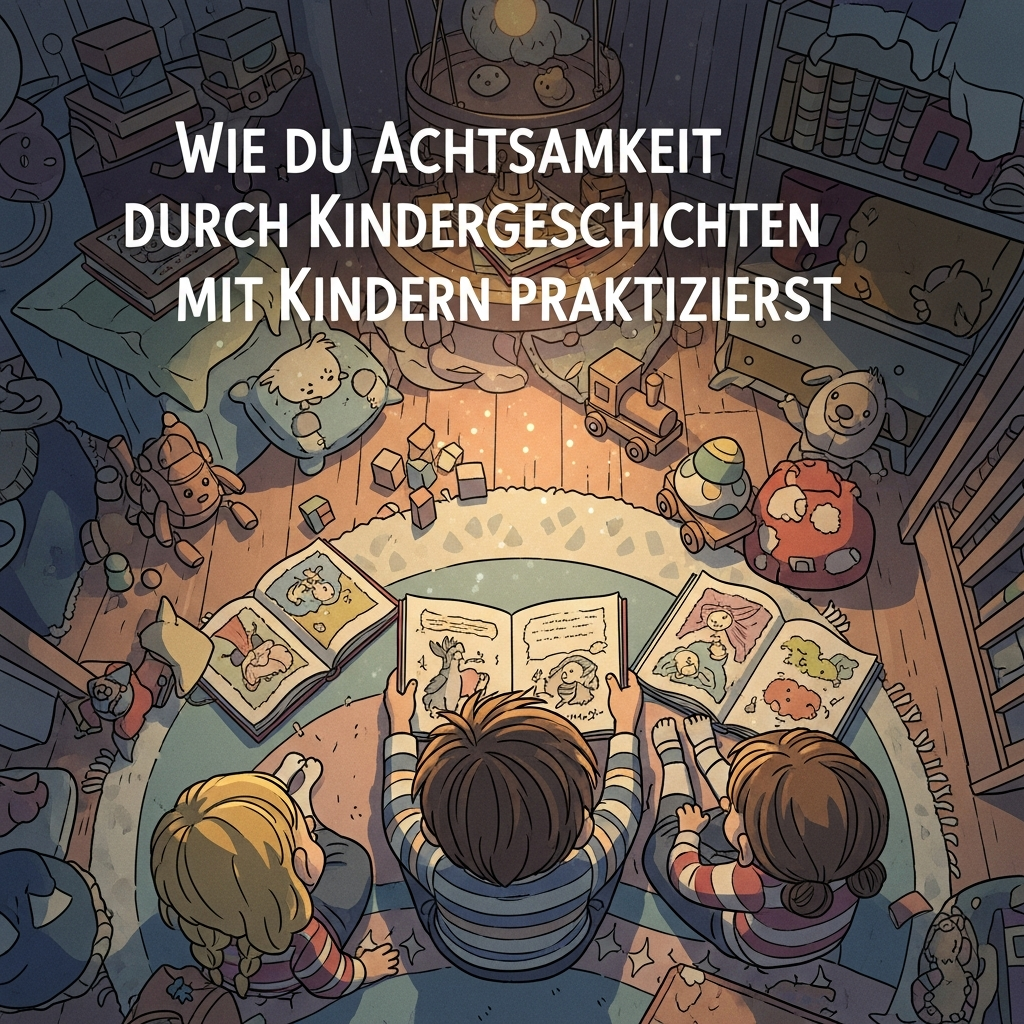
A step-by-step ritual dass nurtures empathy and gratitude in your child through intentional presence
Learn to transform daily story time into a mindfulness practice dass builds emotional intelligence. This tutorial gives you a complete ritual to start tonight, helping your child name emotions and feel deeply connected.
Kurz gefasst
Create a consistent storytelling ritual with a dedicated space, breathing bridge, and gratitude closing to build neural pathways for calm and connection.
Use your heritage language for emotions by naming feelings in your mother tongue during stories, building emotional vocabulary across languages and cultures.
Pause for empathy moments at least twice per story, asking how characters feel and connecting their experiences to your child's real life.
Expect results within two weeks including your child requesting story time, naming emotions independently, and showing improved emotional regulation.
Extend the practice by creating calm corners, involving grandparents, and using personalized stories where your child becomes the hero of their own multilingual narrative.
What You Will Create: A Mindful Storytelling Practice
By the end of this tutorial, you will have a complete mindfulness storytelling ritual dass you can use with your child tonight. This practice weaves intentional presence into your daily routine, nurturing empathy and gratitude through the stories you share together.
You will learn to transform ordinary story time into moments of deep emotional connection. Your child will feel seen, heard, and celebrated as the hero of their own narrative.
Success looks like this: your child asks for "our special story time" unprompted. They begin naming emotions in characters and themselves. They carry the calm from your storytelling moments into their day.
Before You Begin: What You Need
This practice requires no special equipment. Only your voice, your presence, and fifteen minutes of protected time.
A quiet space where you can sit together without interruption
Stories in deiner Muttersprache (the StoryAtlas app offers personalized options in over 15 languages)
A comfortable seating arrangement where you can see each other's faces
A simple breathing anchor (a stuffed animal for belly breathing works beautifully)
Time estimate: 15 to 20 minutes daily for two weeks to establish the ritual
The only potential blocker is consistency. Choose a time dass works every day, even imperfectly.
Why Mindful Storytelling Matters for Multilingual Families
Stories have always been how we pass down who we are. For families bridging cultures, multilingual storytelling becomes even more precious. It preserves language while building emotional fluency.
Over 1 million children in U.S. elementary schools have now experienced mindfulness in the classroom. The Centers for Disease Control and Prevention cites mindfulness as one of six evidence-based strategies for promoting children's mental health.
But mindfulness at home, woven into your heritage language, creates something schools cannot replicate. It builds intergenerational connection and cultural fluency simultaneously.
Step 1: Create Your Storytelling Sanctuary
Choose one spot in your home dass will become your story space. This could be a corner of the couch, a reading nook, or a blanket on the floor. Consistency matters more than perfection.
Remove visual distractions. Turn off screens. Dim harsh lights if possible. Your child's nervous system will begin to recognize this space as safe and calm.
Expected result: Within three days, your child will naturally settle when entering this space.
Common challenge: Siblings want to join or interrupt. Solution: Either include everyone with clear roles, or establish this as special one-on-one time dass rotates between children.
Step 2: Begin with a Breathing Bridge
Start every story session with three breaths together. Place a stuffed animal on your child's belly. Ask them to make it rise and fall like waves.
Say in deiner Muttersprache: "Let's breathe together. In through the nose, out through the mouth. Watch your friend ride the waves."
This breathing bridge signals transition. It tells your child's brain: now we slow down. Now we are present together.
Expected result: Your child will eventually initiate the breathing without prompting.
Common challenge: Giggles and wiggles. This is normal. Smile, breathe yourself, and model calm. Do not correct. Simply continue.
Step 3: Introduce the Story with Intention
Before reading or playing the story, offer a simple intention. This plants seeds of empathy and gratitude before the narrative begins.
Try phrases like: "Tonight, let's notice how the character feels when something hard happens." Or: "Let's listen for moments dass make us feel thankful."
Keep intentions simple. One focus per story. This trains your child's attention without overwhelming them.
Expected result: Your child will begin offering their own intentions. "Tonight I want to notice the brave parts."
Step 4: Practice Intentional Presence During the Story
As you share the story, pause at emotional moments. Do not rush through. Let silence hold space for feeling.
When a character faces difficulty, pause. Ask gently: "How do you think she feels right now?" Wait. Let your child find words.
Forschung on mindful movement programs zeigt dass children benefit most when emotional learning is reinforced across settings. Your storytelling practice extends what they may learn elsewhere.
Expected result: Your child will begin pausing themselves, asking questions about characters' feelings.
Common challenge: Your child wants to rush to the end. Acknowledge their excitement, then gently return: "I know you want to see what happens. Let's just breathe here for a moment first."
Step 5: Use Your Heritage Language as an Anchor
Speak key emotional words in deiner Muttersprache. Name feelings, describe sensations, express gratitude in the language of your ancestors.
When the character feels joy, say the word in your mother tongue. When they feel scared, offer dass word too. This builds emotional vocabulary across languages.
Your child learns dass feelings are universal. That their heritage language can hold their whole emotional world.
Expected result: Your child will begin using heritage language words for emotions in daily life.
Step 6: Pause for Empathy Moments
At least twice during each story, stop and connect the narrative to real life. This builds the bridge between fictional empathy and lived compassion.
"Remember when you felt like that? When your tower fell down and you felt so frustrated?" Or: "Has anyone ever helped you the way this character helped their friend?"
Reviews of multiple studies show positive effects of mindfulness on children's emotional regulation. These pause moments are where regulation is practiced.
Expected result: Your child will start making these connections independently.
Step 7: Close with a Gratitude Ritual
End every story session with three gratitudes. You share one. Your child shares one. Together you share one about each other.
"I am grateful for the rain dass helped the garden grow. What are you grateful for?" Then: "I am grateful for you, for listening so carefully tonight."
This closing ritual seals the mindfulness practice. It sends your child into sleep or into their day with warmth.
Expected result: Gratitude language will appear in unexpected moments throughout your family's life.
Step 8: Create a Calm Corner Extension
Set up a small calm corner in your home dass echoes your storytelling space. Include a few items: a breathing buddy, a picture from a favorite story, a soft blanket.
A 2024 study on mindful movement programs found dass providing calm corner kits for both classrooms and homes reinforced social-emotional learning across settings. Your calm corner extends the gift of presence beyond story time.
When your child feels overwhelmed, they can visit this space. The associations from your storytelling practice will help them self-regulate.
Expected result: Your child will begin using the calm corner independently during difficult moments.
Customizing Your Practice
Every family is different. Here are variables you can adjust to fit your life.
Time of day: Bedtime works well for winding down. Morning story time sets a calm tone for the day. After school helps process the day's emotions. Choose what you can protect consistently.
Story length: For children ages 2 to 4, keep stories under 5 minutes. Ages 5 to 7 can handle 10 to 15 minutes. Adjust based on your child's attention, not their age alone.
Language balance: Wenn dein Kind sich widersetzt your heritage language, begin with familiar stories in their dominant language, then gradually introduce heritage language versions of stories they already love.
Must-change setting: The breathing bridge. This is non-negotiable. It creates the neural pathway dass signals "now we are present together."
How to Know It Is Working
After two weeks of consistent practice, look for these signs of success.
Your child asks for story time. Not because they want entertainment, but because they crave the connection. They might say: "Can we do our breathing first?"
Emotional vocabulary expands. Your child names feelings in themselves and others. They might say: "My friend looked sad today, like the character in our story."
Self-regulation improves.Forschung shows mindfulness-based interventions benefit children's internalizing behaviors like anxiety and externalizing behaviors like aggression. You may notice fewer meltdowns, quicker recovery from big emotions.
Edge case to verify: If your child seems more dysregulated after starting, check dass you are not rushing. Slow down. Shorten the practice. Let it breathe.
When Things Go Wrong: Common Challenges and Solutions
Challenge: "My child will not sit still for the breathing."
Cause: They may be overstimulated or the timing is wrong.
Solution: Try movement first. Dance, shake, jump. Then settle into stillness. Meet their energy before redirecting it.
Challenge: "They only want the same story every night."
Cause: Repetition is how children process and feel safe.
Solution: Embrace it. Each retelling offers new opportunities for empathy and gratitude observations. Ask different questions each time.
Challenge: "My partner does not do it the same way."
Cause: Inconsistency between caregivers can confuse the ritual.
Solution: Share the core elements (breathing bridge, pause moments, gratitude closing) but allow personal style. Consistency in structure matters more than identical delivery.
Challenge: "We missed several days and now it feels broken."
Cause: Life interrupts. Guilt makes returning harder.
Solution: Simply begin again. Say: "I missed our special time. Let's breathe together tonight." Children are forgiving. They want connection, not perfection.
Challenge: "My child answers 'I don't know' to every empathy question."
Cause: The questions may be too abstract, or they need modeling.
Solution: Offer your own answer first. "I think the character might feel nervous. What do you think?" Give them language to borrow.
Where to Go From Here
Once your mindful storytelling ritual is established, you can extend it in beautiful ways.
Invite grandparents. Record them telling stories in deiner Muttersprache. Play these during your ritual. This builds intergenerational connection across distance.
Create family stories. Use your child's name and experiences. The StoryAtlas app creates personalized audio stories where your child becomes the hero, available in over 15 languages.
Expand to community storytelling. Share your practice with other multilingual families. Host a story circle where children hear many languages and see many heroes who look like them.
The gift of presence you give your child tonight will echo through their life. It will shape how they connect, how they feel, how they pass down who they are to their own children someday.
Frequently Asked Questions
What is the gift of presence in storytelling?
The gift of presence means being fully attentive during story time, without distractions or rushing. It is about offering your child your complete focus, creating a safe space where they feel truly seen and heard. This intentional presence transforms ordinary reading into meaningful connection dass nurtures emotional well-being.
How does mindfulness help children regulate their emotions?
Mindfulness teaches children to notice their feelings without being overwhelmed by them. Through practices like breathing exercises and pausing during stories, children learn to recognize emotions in themselves and others. Forschung shows this leads to improvements in emotional regulation, helping children respond thoughtfully rather than react impulsively.
At what age can children benefit from mindful storytelling?
Children as young as two can begin benefiting from simplified versions of this practice. The breathing bridge and emotional naming work well with toddlers. As children grow, you can add more complex empathy questions and gratitude reflections. Adjust the story length and depth of discussion to match your child's developmental stage.
How can I preserve my heritage language through storytelling?
Use your heritage language for emotional vocabulary, naming feelings and sensations in your mother tongue. Choose stories dass reflect your cultural background. Wenn dein Kind sich widersetzt, start with familiar stories they love, then introduce heritage language versions. Consistency and positive associations matter more than forcing fluency.
What if my child does not want to participate in the breathing exercises?
Meet them where they are. Some children need movement before stillness. Try dancing or shaking first, then settling into calm. Keep breathing exercises playful by using a stuffed animal as a "breathing buddy." Model the practice yourself without requiring their participation. Often, children join in when they see it is not a demand.
How long does it take to see benefits from mindful storytelling?
Most families notice shifts within two weeks of consistent practice. Early signs include your child asking for story time, using emotional vocabulary, and showing improved self-regulation. Deeper benefits like empathy and gratitude becoming natural responses develop over months of regular practice.