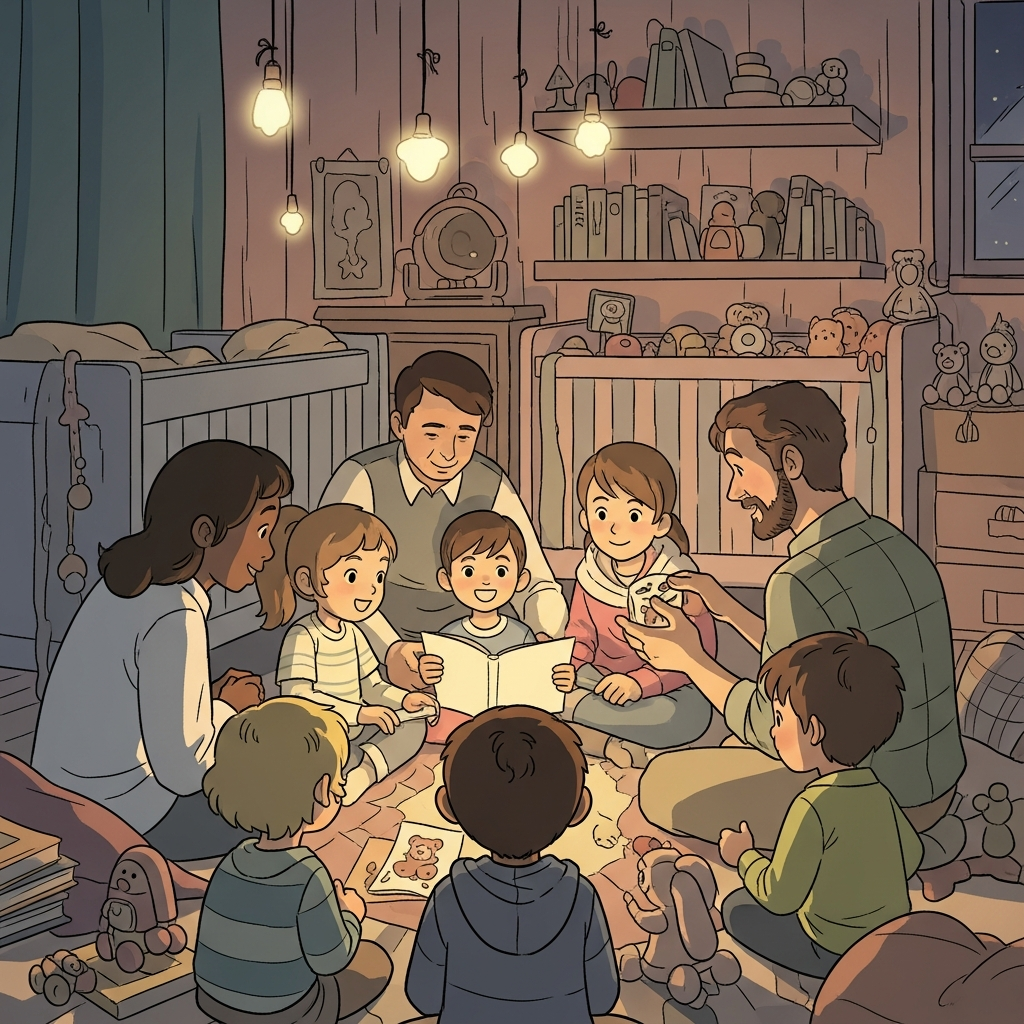
Comparing two storytelling approaches for cognitive engagement in multilingual children aged 2-7
Discover which storytelling method better supports your bilingual child's development. This comparison examines cognitive engagement, cultural authenticity, and language preservation to help you choose the right approach for your family.
Zusammenfassung
Community storytelling wins for cognitive engagement with research showing significantly higher learning outcomes through personalized, culturally relevant content versus traditional methods.
Traditional storytelling excels at emotional bonding when you have fluent heritage language speakers available and time for intentional presence.
For busy bilingual families in Germany, community storytelling offers the accessibility and consistency needed for daily heritage language practice.
The best approach combines both: community storytelling for regular practice, traditional storytelling for special intergenerational moments.
Personalization matters deeply because children engage more when they see their name, their city, and their cultural world reflected in stories.
The Story Crossroads: Where Tradition Meets Community
Du stehst vor einer Entscheidung, die viele zweisprachige Eltern kennen. Your child needs stories that feel like home. But which path leads there?
Traditional storytelling offers the familiar comfort of bedtime rituals passed down through generations. Community storytelling brings something different: voices, names, and worlds that mirror your child's unique identity.
This comparison explores both approaches through one lens: cognitive engagement in multilingual children aged 2-7. We examine how each method supports language development, cultural connection, and that spark of recognition in your child's eyes.
Quick Verdict: Which Path Fits Your Family?
Choose traditional storytelling if you have strong family storytellers, time for daily rituals, and want to pass down specific tales from your heritage exactly as you remember them.
Choose community storytelling if you need flexible, personalized content in your heritage language, want your child to see themselves as the hero, or lack access to native-language storytellers.
For most bilingual families in Germany juggling two cultures and limited time, inclusive storytelling through community-driven approaches offers stronger cognitive engagement and cultural bridging.
Criterion | Traditional Storytelling | Community Storytelling | Winner |
|---|---|---|---|
Cognitive Engagement | Moderate | High | Community |
Cultural Authenticity | High (if available) | High (personalized) | Tie |
Language Preservation | Variable | Consistent | Community |
Accessibility | Limited | High | Community |
Intergenerational Bond | Strong | Moderate | Traditional |
Personalization | Low | High | Community |
What We're Measuring and Why It Matters
Cognitive engagement sits at the heart of this comparison. When a child leans forward, asks questions, and remembers details days later, that's engagement working.
Cultural fluency matters because language without context becomes hollow. Stories must carry the weight of heritage, not just vocabulary.
Accessibility acknowledges reality. Not every family has a grandmother nearby who speaks fluent Tagalog or Turkish.
Personalization recognizes that children engage differently when they hear their own name, their own city, their own world reflected back.
Emotional well-being connects to how seen and valued a child feels through stories. This shapes identity formation during critical years.
Practical sustainability asks: can your family maintain this approach daily, weekly, monthly?
Head-to-Head: Cognitive Engagement
Traditional Storytelling
The warmth of a parent's voice, the familiar rhythm of a tale told many times. Traditional storytelling creates beautiful moments of connection.
Yet research reveals limitations. A 2025 study found that conventional storytelling methods showed measurably lower cognitive engagement compared to personalized, community-relevant approaches. Children listened, but they didn't always lean in.
Traditional methods work best when the storyteller is skilled, present, and fluent. These conditions don't always align with busy family life.
Community Storytelling
Something shifts when a child hears their own name in a story. When the hero lives in their city, speaks their languages, navigates their world.
The same research showed personalized, community-relevant digital storytelling achieved a t-value of 20.01 (p < 0.001) for improved storytelling skills. Children using these approaches showed significant gains across eight storytelling aspects: story structure, sequencing, character recognition, setting recognition, and descriptive vocabulary.
Verdict: Community storytelling wins for cognitive engagement, particularly when personalization and cultural relevance combine.
Head-to-Head: Cultural Authenticity
Traditional Storytelling
There's something irreplaceable about hearing your grandmother's story in her voice, with her pauses, her laughter, her particular way of saying certain words.
Traditional storytelling carries narrative authenticity through lived experience. The storyteller embodies the culture, doesn't just represent it.
The limitation? Many bilingual families lack access to these storytellers. Distance, time zones, and loss create gaps that memory alone cannot fill.
Community Storytelling
Inclusive storytelling approaches draw from collective cultural knowledge. They incorporate authentic elements: foods, celebrations, values, humor, and linguistic nuances specific to heritage communities.
Research on storytelling techniques found that 70% of effective children's content used culturally-rooted elements like rhymes and songs, while 90% included moral lessons that resonated with community values.
Verdict: Tie. Traditional storytelling offers irreplaceable personal authenticity when available. Community storytelling provides consistent cultural access when it's not.
Head-to-Head: Language Preservation
Traditional Storytelling
Parents often struggle with heritage language fluency themselves. Second-generation immigrants may understand their parents' language but lack confidence in speaking or reading it.
Traditional storytelling requires the storyteller to be fluent. This creates a bottleneck that many families cannot overcome.
Community Storytelling
Platforms like StoryAtlas offer stories in over 15 languages, providing consistent exposure even when parents lack full fluency. The child hears proper pronunciation, grammar, and vocabulary.
Studies show that varied storytelling techniques, including community approaches, led to 30% improvement in vocabulary recognition and comprehension in children aged 4-5.
Verdict: Community storytelling wins for consistent language preservation, especially for families where heritage language fluency varies.
Head-to-Head: Accessibility and Convenience
Traditional Storytelling
Beautiful in theory. Challenging in practice.
Traditional storytelling requires time, presence, and energy. After long workdays, many parents lack the capacity for elaborate storytelling sessions. The guilt compounds when heritage language practice slips.
Community Storytelling
Research indicates that 80% of parents used storytelling daily in early education, with 60% preferring animated voice techniques. This suggests families want engagement but need support delivering it.
Digital community storytelling meets families where they are. During car rides, before bed, while cooking dinner. The story is always ready.
Verdict: Community storytelling wins decisively for accessibility, particularly for time-pressed bilingual families.
Head-to-Head: Emotional Connection and Presence
Traditional Storytelling
The gift of presence cannot be digitized. When you sit with your child, create voices, answer their questions, and share in the magic together, something profound happens.
This intentional presence builds intergenerational connection that no technology replicates. Your child remembers not just the story, but you telling it.
Community Storytelling
Interestingly, research from 2024 found that 57% of children aged 5-6 preferred interactive digital storytelling over parent-led sessions, citing more questions and positive feedback. Children had shorter, more frequent interactions with digital approaches.
This doesn't diminish parental presence. It suggests that community storytelling can complement, not replace, shared experiences between parent and child.
Verdict: Traditional storytelling wins for deep emotional bonding, though community storytelling offers valuable daily touchpoints.
When Each Approach Shines
If you have fluent heritage language speakers in your daily life, lean into traditional storytelling. Record grandparents telling stories. Build those irreplaceable memories.
If you're navigating heritage language preservation alone, community storytelling provides the consistent exposure your child needs without requiring fluency you may not have.
If your child struggles to engage with generic stories, personalized community storytelling that includes their name and cultural context will likely spark stronger cognitive engagement.
If you want to strengthen family traditions, blend both approaches. Use community storytelling for daily practice, traditional storytelling for special moments of authentic communication.
If accessibility is your primary barrier, community storytelling removes friction that traditional methods cannot overcome.
What Both Approaches Miss
Neither traditional nor community storytelling fully solves the challenge of peer validation. Your child may still feel different from German-speaking friends, regardless of how many heritage stories they hear at home.
Both approaches also require parental intention. Stories alone don't preserve culture. They need context, conversation, and connection to family traditions that extend beyond the narrative.
The broader challenge of raising bilingual children in a dominant-language environment remains. Stories are one tool, not the complete solution.
Switching Between Approaches
The good news: these approaches aren't mutually exclusive. Many families blend them naturally.
Starting with community storytelling is low-friction. Platforms like StoryAtlas require no preparation, no fluency prerequisites, and no scheduling around relatives' availability.
Adding traditional storytelling elements over time enriches the foundation. As your child develops language skills through community stories, they become better equipped to engage with traditional tales from family members.
There's no lock-in with either approach. The only cost of switching is time, and the benefit of combining both outweighs any transition friction.
The Path Forward for Your Family
For bilingual families in Germany seeking cognitive engagement and cultural preservation, community storytelling offers the stronger foundation. The research supports it. The accessibility enables it. The personalization powers it.
But don't abandon traditional storytelling. Those moments of intentional presence, of shared experiences across generations, carry weight that no algorithm captures.
The most effective approach combines both: community storytelling for consistent daily practice, traditional storytelling for meaningful connections and empathy and gratitude between generations.
Your child deserves to feel like the hero of their own story. Whether that story comes from a grandparent's memory or a personalized audio adventure, the goal remains the same: building a bridge between cultures that your child walks across with confidence.
Frequently Asked Questions
What is the concept of 'The Gift of Presence' in storytelling?
The gift of presence means being fully engaged when sharing stories with your child. It's not just reading words aloud. It's making eye contact, responding to questions, creating voices, and sharing in the wonder together. This intentional presence creates memories that outlast any single story.
How can community storytelling support heritage language preservation?
Community storytelling provides consistent exposure to heritage languages through properly pronounced, grammatically correct content. For parents who understand their heritage language but lack speaking confidence, these stories fill the fluency gap while maintaining daily language practice for children.
Why does personalization improve cognitive engagement in children?
When children hear their own name in a story, their brain activates differently. They become participants rather than observers. Research shows personalized, culturally relevant stories achieve significantly higher engagement scores because children see themselves reflected in the narrative.
Can I combine traditional and community storytelling approaches?
Absolutely. Many families use community storytelling for daily practice and reserve traditional storytelling for special moments with grandparents or during cultural celebrations. This blend offers both consistent language exposure and irreplaceable intergenerational bonding.
What age is best for starting multilingual storytelling?
Research focuses on children aged 2-7 as the critical window for language acquisition and cultural identity formation. Starting early with inclusive storytelling helps establish heritage language as a natural part of your child's world rather than something separate or difficult.
How do I choose stories that feel culturally authentic?
Look for stories that include specific cultural elements: foods your family eats, celebrations you observe, values you hold, and humor that resonates with your heritage. Authentic stories feel familiar, not like translations of generic content.