Die kognitiven Vorteile von Kindergeschichten hängen von kultureller Spezifität ab – nicht von universeller Attraktivität
Discover why personalized, intergenerational narratives create stronger emotional bonds than generic content. Learn how cultural specificity transforms forgettable stories into meaningful family traditions.
TL;DR
Generic content fatigue is real - Standardized stories designed for everyone often resonate with no one, teaching children their identity doesn't belong in stories worth telling
Personalization drives memory - Stories are 22x more memorable than facts, but only when they create genuine emotional connection through cultural relevance and personal details
Intergenerational narratives preserve identity - Every bedtime story in your heritage language is a vote for cultural continuity and language maintenance
The shift we need - From content that broadcasts to content that belongs, from stories for anyone to stories that could only be for your child
The Quiet Erosion Happening at Bedtime
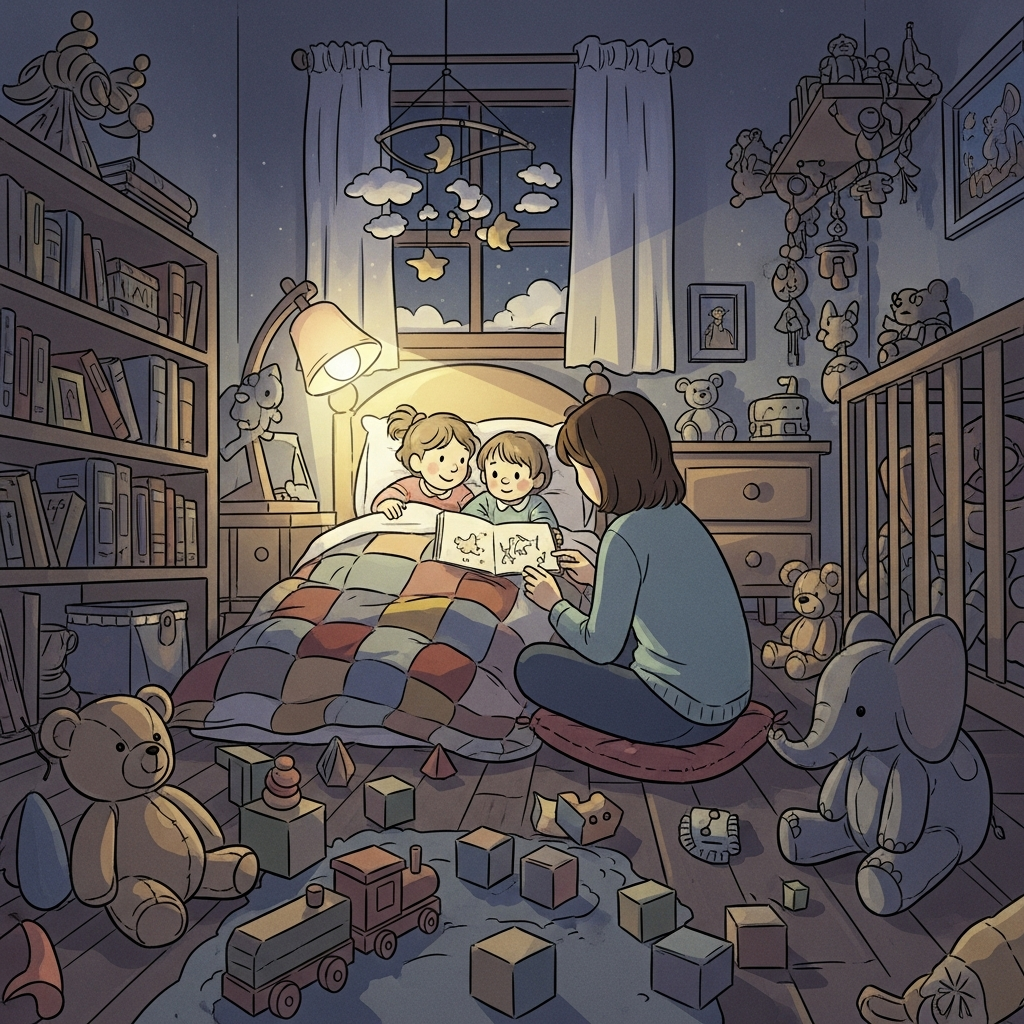
Something strange happens when you read the same generic story to your child for the hundredth time. The words lose their weight. The magic drains away. Your child's eyes wander to the ceiling, and you catch yourself rushing through pages just to reach the end.
But here's what troubles me more: that moment when your child asks why the hero never looks like them. Why the grandmother in the story doesn't speak the way Oma actually speaks. Why the world in these pages feels like someone else's world.
This is generic content fatigue. And it's quietly stealing something precious from our families.
The Myth of Universal Stories
We've been told that great stories transcend culture. That a well-crafted tale works for every child, everywhere. Publishers built empires on this belief, creating content designed to offend no one and resonate with everyone.
The logic made sense. Scale requires standardization. And for a while, it worked well enough.
But "well enough" is not the same as meaningful. Generic stories strip away the very details that make narratives stick: the specific smell of your grandmother's kitchen, the particular way your family celebrates, the sound of your heritage language wrapping around familiar words.
When we remove cultural specificity to achieve broad appeal, we don't create universal stories. We create forgettable ones.
The Real Cost of Forgettable
Here's what I actually believe: Generic content doesn't just bore children. It teaches them that their identity doesn't belong in stories worth telling.
This isn't sentimentality. The cognitive benefits of storytelling depend entirely on emotional engagement. Stories are 22 times more likely to be remembered than facts alone, but only when they create genuine connection. A story that feels like it belongs to someone else activates none of the neural pathways that make narratives so powerful for learning and identity formation.
I've watched this play out in countless families across Germany. Parents who desperately want to pass down their heritage language find themselves competing against polished, professionally produced content that their children actually enjoy. The choice feels impossible: connection to culture, or engagement with content.
But this is a false choice created by an industry that prioritized efficiency over meaning.
What Happens When Stories Carry Names
A researcher I spoke with described studying digital storytelling with older adults experiencing cognitive impairment. What struck her wasn't the technology. It was watching participants light up when stories included details from their own lives. Their memories sharpened. Their engagement deepened. They became co-creators rather than passive consumers.
The same principle holds for children, perhaps even more powerfully.
When a story includes your child's actual name, when the hero speaks your family's language, when the setting echoes places your child recognizes, something shifts. The narrative stops being entertainment and becomes a mirror. Your child sees themselves as someone whose story matters enough to be told.
This is how emotional bonds through stories actually form. Not through generic moral lessons, but through recognition. Through belonging.
Research shows that the impact of stories on beliefs fades by only 32% over a day, compared to 73% for statistics. But the stories that persist longest are the ones that feel personally relevant. The ones that echo our own experience back to us.
The Generational Thread
If personalized, culturally specific stories matter this much, then we need to rethink how we approach children's content entirely.
Intergenerational narratives don't just entertain. They transmit identity. When your child hears a story in your heritage language, featuring characters who share their background, something gets planted that generic content can never provide: a sense of continuity. A feeling that they belong to something larger than themselves.
For bilingual families, this matters urgently. Every bedtime story is a small vote for or against heritage language maintenance. Studies confirm that 97.5% of participants agree storytelling connects new information to existing knowledge, enhancing both learning and memory. But this connection only happens when the story meets the child where they actually are.
The cost of getting this wrong isn't just a bored child at bedtime. It's a frayed connection to culture that becomes harder to repair with each passing year.
A Different Way to See Content
What if we stopped thinking about children's stories as products to consume and started seeing them as threads to weave?
Generic content treats stories as one-way transmissions: from creator to audience, identical for everyone. But the most powerful narratives have always been participatory. They adapt. They include. They make room for the listener to see themselves inside the tale.
This is the shift: from content that broadcasts to content that belongs. From stories that could be for anyone to stories that could only be for your child.
The technology to enable this exists now. Personalized storytelling platforms can generate narratives in over fifteen languages, featuring your child's name, reflecting your family's cultural context. The magic that once required a grandparent with endless imagination can now arrive instantly.
The Stories That Stay
Your child won't remember most of the content they consume. The generic tales will blur together, indistinguishable from background noise.
But the stories that named them? The ones that spoke their grandmother's language? The narratives that made them feel like the hero of something real?
Those become the foundation of who they understand themselves to be. And that's not a small thing. That's everything.
Frequently Asked Questions
What is multilingual storytelling?
Multilingual storytelling creates narratives in multiple languages, allowing families to share stories in their heritage language alongside their primary language. It preserves cultural connection while supporting natural language learning through emotional engagement.
How can storytelling in multiple languages enhance language learning?
Children learn language best through emotional connection, not rote memorization. When stories feel personally meaningful and culturally relevant, children naturally absorb vocabulary and language patterns because they're genuinely engaged.
Why is personalized storytelling more effective than generic content?
Personalized stories activate deeper emotional encoding in the brain. When children hear their own name and recognize their cultural context, retention increases dramatically and the narrative becomes part of their identity formation.