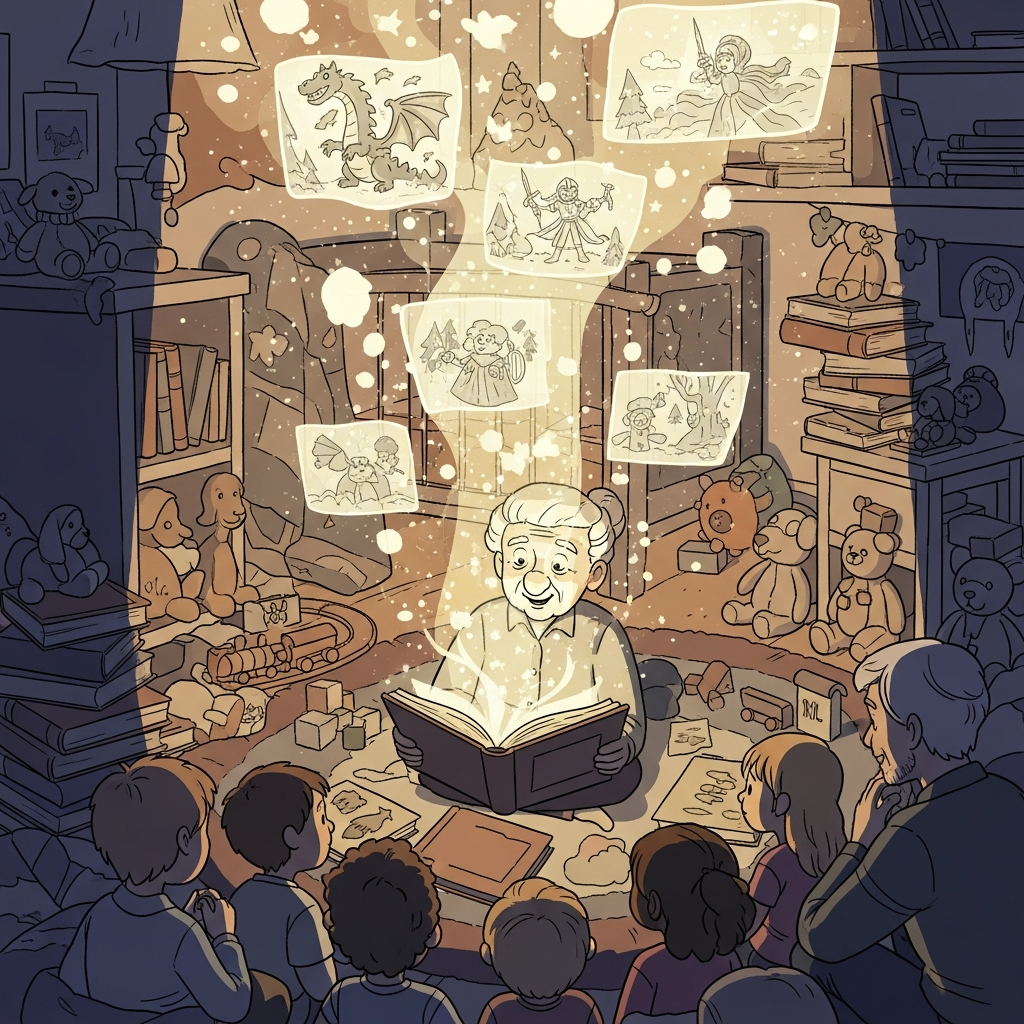
The language you tell stories in matters more than the stories themselves—here's why heritage language storytelling creates lasting connections
Discover why reading to your child in your heritage language creates deeper cognitive engagement and emotional well-being than any translated story can. This piece explores how narrative authenticity becomes the infrastructure of belonging for multilingual families.
Zusammenfassung
Narrative authenticity is infrastructure, not decoration - Stories in heritage languages do something German-only stories cannot: they claim children as part of a larger story.
The cognitive and emotional benefits are real - Children process stories in native languages more deeply, and this connection buffers against identity struggles later.
The window is small - Ages 2-7 are when heritage language becomes lived experience rather than homework.
This is about legacy - The stories you tell now become the stories your children tell their own children about who they are.
The Story You Tell Matters Less Than the Language You Tell It In
Here is something I have noticed. You read your child a bedtime story in German. They understand every word. They laugh at the right moments. They drift off peacefully.
And yet, something feels hollow.
The story worked. But it did not reach them. Not in the way your grandmother's voice once reached you, telling tales in a language that felt like home itself.
The Myth of "Good Enough" Storytelling
We have been told that what matters is reading to our children. Any book. Any language. Just read. The experts say it builds vocabulary, strengthens bonds, prepares them for school.
This is true. And it is also incomplete.
The dominant belief among multilingual families in Germany goes something like this: German is practical. Heritage language is nice, but optional. Children will absorb culture through occasional visits, holiday meals, maybe a song here and there.
This approach made sense when communities were tight and grandparents lived nearby. It does not work anymore. Not when family structures are shifting dramatically, with traditional households declining from 66% to 47% over fifty years.
Narrative Authenticity Is the Bridge You Cannot Buy
Here is what I actually believe: Narrative authenticity is not a style preference. It is the infrastructure of belonging.
When a child hears their own name in a story told in their heritage language, something shifts in their brain and their heart simultaneously. They are not just listening. They are being claimed. They are being told: you belong to something larger than this moment.
What the Research Reveals About Presence and Connection
Consider what happens when families prioritize authentic emotional connection. Research from 2025 shows that warm, steady parent-child relationships, including emotional check-ins and meaningful conversations, serve as one of the strongest buffers against teen mental health struggles.
This is not about perfection. It is about presence. The gift of presence.
I have watched families struggle with this. A mother from Turkey, raising her daughter in Munich, told me she felt like a fraud. She spoke Turkish at home, but all the stories available were in German. Her daughter started associating Turkish with commands and corrections. German became the language of magic and adventure.
The heritage language was surviving. But it was not thriving.
Now consider the opposite. When children experience stories in their heritage language, stories where they are the hero, where the landscape feels familiar, where the values echo what their grandparents whisper, something remarkable happens.
Cognitive engagement deepens. The brain processes stories in a native language differently. There is less translation happening, more absorption. The child is not working to understand. They are simply being in the story.
Emotional well-being follows. Studies show that 22% of Americans have stopped talking to family members over personal disagreements. The fractures start somewhere. Often, they start with disconnection from shared stories, shared language, shared meaning.
Children who grow up with narrative authenticity have something to hold onto. A thread connecting them to people they may never meet, places they may rarely visit, traditions that might otherwise fade.
The Stakes Are Higher Than We Admit
If this is right, then we are not just talking about bedtime routines. We are talking about identity formation. About whether your child will feel rooted or rootless. About whether they will have the language, literally, to connect with aging relatives before it is too late.
The window is small. Between ages two and seven, children are linguistic sponges. After that, heritage languages become homework. Something to study rather than something to live.
Every German-only story is a missed opportunity. Not because German stories are bad. But because they cannot do what heritage language stories do. They cannot say: this is where you come from.
A New Way to Think About Multilingual Storytelling
Stop thinking of heritage language as a bonus feature. Start thinking of it as emotional infrastructure.
The question is not: "Should we teach our child our language?"
The question is: "What stories will they tell their own children about who they are?"
Multilingual storytelling is not about preservation for preservation's sake. It is about giving your child the gift of presence across generations. It is about intergenerational connection that survives distance, time, and the inevitable drift of modern life.
The Story That Stays
Your child will forget most of the toys you buy them. They will outgrow the clothes, lose interest in the games.
But the story where they were the hero? Told in the language that sounds like your mother's kitchen, your father's laughter, your own childhood?
That stays.
That becomes the story they tell themselves about who they are. And eventually, the story they tell their own children.
This is what narrative authenticity offers. Not entertainment. Legacy.
Frequently Asked Questions
What is the gift of presence in storytelling?
The gift of presence means being fully engaged when sharing stories with your child, not just reading words but creating a moment of genuine connection. In multilingual families, this deepens when stories are told in heritage languages that carry emotional and cultural weight.
How does multilingual storytelling support emotional well-being?
Children who hear stories in their heritage language experience stronger identity formation and feel connected to their roots. This sense of belonging serves as a foundation for emotional resilience throughout their lives.
When is the best time to start heritage language storytelling?
The window between ages two and seven is critical, as children absorb language naturally during this period. Starting early transforms heritage language from something studied into something lived.